

W1NGE
Member
- First Name
- Adrian
- Joined
- Jan 11, 2021
- Threads
- 25
- Messages
- 5
- Reaction score
- 2
- Location
- Aberdeen, Scotland
- Vehicles
- GTS ST, Macan T

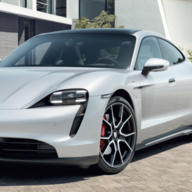


https://newsroom.porsche.com/en/202...day-strategy-sportwagenschmiede-35-43419.htmlIn addition, Porsche will benefit from an expanded product portfolio. This will start with the all-electric 718 Boxster and Cayman models, which are expected to support sales in their first full year of production in 2028.


This is a very Tesla-esk mindset with too much tech in cars. Weird to think Porsche would want to compete in that space.If it doesn't launch until 2028 Porsche will well and truly have missed the boat on this. They need to understand that we're in a similar innovation curve as we had with desktop computers back in the 90s. They can't be track-testing a vehicle in mid-2026 to launch in 2028, by then all the tech will be outdated and superseded.
As it happens, some of the Chinese models arriving in the UK are so impressive that it's already starting to put Porsche EVs as a very expensive historic badge/prestige option.
Beg to disagree.This is a very Tesla-esk mindset with too much tech in cars. Weird to think Porsche would want to compete in that space.
Battery tech, aside from a solid state breakthrough, hasn't and won't improve much just as we've seen in the past decade.
Gravimetric energy density has only increased about 20% in the last decade. It isn't like computers at all. The Taycan is approaching 10 years old and still is one of the faster charging cars. 900V architecture isn't being usurped anytime soon.
Rant aside, I agree they are missing the boat because you have legit alternatives: the A110 EV releasing in the same window for a less compromised sports car or MG Cyberster which competes on value.
Crazy to think I've been waiting for this car since I heard about it 5 years ago.
As of today we have 2 cars in europe that charge at 1500kwYou're conflating component breakthroughs with improvements in production cars.
Charging: A 1,500 kW charger doesn't mean a car charges at 1,500 kW. Actual rates depend on battery chemistry, voltage, temperature and charging curves.
Range: 400–500 miles from a 70–100 kWh battery depends heavily on the test cycle. CLTC figures aren't directly comparable to real range. Tesla has been claiming 300 miles of range for 16 years at 85kwh.
Motors: The 3,000-hp claim may be real as a peak output figure, but it doesn't mean the motor is 2–3x more efficient. They just put stronger motors in EVs. No real breakthrough advancement there. EV motors are already highly efficient, leaving diminishing returns. Peak power and efficiency are entirely different metrics.
My biggest gripe is that EVs aren't computers. Computing benefited from exponential gains in transistor density and performance. Batteries aren't progressing even at a fraction of the rate because they face physical and chemical constraints. IE: Faster charging generates more heat, doubling range requires substantially more energy storage, and motors are already near their practical efficiency ceiling. These technologies can improve, but not on the same exponential curve.
Again my issue is that you're trying to hide the gap by counting individual lab gains that don't make it into a product, or things like an off-site charger that isn't special in any way aside from now they have a business case to make them. Scaling existing technology with good engineering doesn't scream breakthrough and progress.
 https://www.carwow.co.uk/byd/news/11391/new-byd-atto-8-electric-suv-10-minute-charging
 I guess until a car goes 10000000000000000000000000000km on a 1kw battery, it's not exponential enough. Not labs.
You're missing the point of this conversation. None of these feats are exponential improvement.As of today we have to cars in europe that charge at 1500kw
Denza Z9GT that you can buy today and BYD Atto 8 that goes on sale in January.
The range is WLTP, for europe
The 3000hp claim is very real and is on a production car that currently holds the world record for fastest car in the world. https://www.caranddriver.com/news/a68005437/yangwang-u9-xtreme-top-speed-record/
The more efficent motors applies industry wise, not specifically to that car. But sure, j1.1 taycan efficency is 2x the efficency of the newest EVs releasing. Could just be magic, and not more efficent motors.
My biggest gripe is that 2-4x improvment in 5 years is considered "not exponential" by some
Batteries have improved in density, chemistry, output and input of energy exponentially in the last 5 years. Which allows cars to charge at 1500kw and offer 500miles of range; wheres 5 years ago most cars couldn't deliver 200kw charging and 250miles of range
These are production cars of today, on sale today, in europe, production numbers
Again, USA is not the center of the world, definitely not of the auto industry world. EVs have advanced exponentially in the last 5 years; and will continue to do so. If we go by labs number, they will for sure increase yet again by a factor of 2-4x again by 2030 - manufacturing yeilds is the last problem they are solving for those.
The battery pack that charges at 1500kw has 3x the life cycle of the battery in the taycan. They are quoting ~4000 0-100% charging cycles at max speed before any significant battery degradation.You're missing the point of this conversation. None of these feats are exponential improvement.
Charging at a higher rate has always been achievable, it simply sacrifices pack life. Again, an engineering feat over actual progress.
It's been 16 years since the Model S. Gravimetric energy density has about doubled since then at the cell level from 160wh/kg. However, this isn't reflected as double pack density since there is a lot more weight that goes into packaging.
In the last 10 years we've only increased by 35% or so. The major leap was in 2014-2016 up to 260 wh/kg. Today is up to 350 wh/kg.
Where is the exponential growth of doubling of capacity every two years? As a side note, it's a bit weird you care so much about country.
At the end of the day, no consumer drives a battery cell. They drive a car. And cars offer on average 2-4x efficiency, range, charging speed and power compared to 5 years ago.